
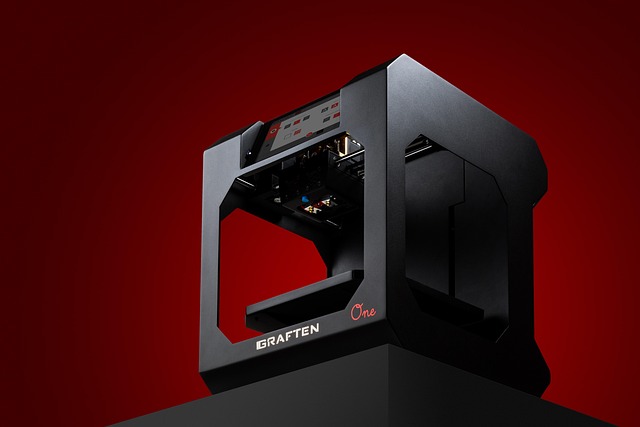
A New Standard in Desktop 3D Printing Intelligence
Bambu Lab, the company that disrupted the desktop 3D printing market with its X1 series, is now raising the bar with the X2D. Announced this week via a product listing on the company's store, the X2D is not just another dual-nozzle printer—it integrates artificial intelligence into the core printing process. While hobbyists and professionals have long struggled with print failures that waste time and material, Bambu Lab claims the X2D's AI monitoring system can spot problems along the full filament path before they ruin a job. Based on our examination of the published details, this appears to be the first consumer-grade printer to offer end-to-end AI-driven quality assurance.
The X2D's centerpiece is its dual-nozzle setup, which enables faster multi-color prints and easier removal of support structures compared to single-nozzle machines. But what sets it apart is the AI that constantly watches the filament from spool to nozzle. The system monitors for clogs, tangles, and extrusion inconsistencies, intervening before a layer goes wrong. For users printing complex multi-part assemblies or delicate models, this could reduce the frustration of waking up to a half-finished spaghetti mess.
Technical Details: Dual Nozzles and Active Chamber Heating
The X2D features two independent nozzles, allowing for seamless color switching without the waste of a purge tower—a common inefficiency in single-nozzle multi-color printers. Bambu Lab's official description notes that the dual-nozzle design “handles multi-color prints faster and removes supports more cleanly than anything else in its class.” This is a direct challenge to competitors like Prusa and Creality, whose multi-material upgrades often add complexity and material waste.
Active chamber heating is another key upgrade. The X2D maintains a consistent internal temperature, which is critical for printing high-performance materials such as polycarbonate, nylon, or carbon-fiber composites. Without a heated chamber, these materials tend to warp or delaminate as they cool unevenly. The X2D's ability to heat the chamber actively—Bambu Lab has not published exact temperature specs yet, but the X1 series reached up to 60°C—means users can reliably print engineering-grade materials without an aftermarket enclosure. This brings industrial reliability to a desktop footprint.
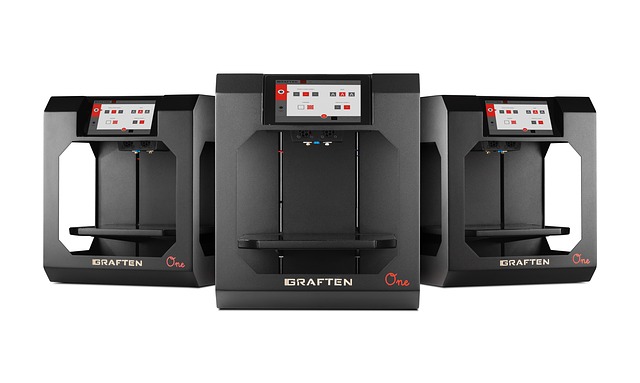
How the AI Monitoring Works
According to Bambu Lab's product page, the AI monitors “the full filament path” to catch bad prints before they waste your time and materials. This is more than just a simple filament runout sensor. The system uses a combination of optical sensors and machine learning algorithms to detect anomalies in real time. For example, if the filament diameter varies beyond tolerance, the AI can pause the print and alert the user. If a tangle develops on the spool, the system can slow the feed or halt the job before the print head drags a failed layer across the model.
Bambu Lab's previous generation, the X1 Carbon, already included a lidar-based first-layer inspection. The X2D expands that to cover the entire print cycle. This is a meaningful evolution: instead of just checking the initial adhesion, the X2D continuously verifies layer quality, nozzle pressure, and material flow. For the 3D printing community, this addresses one of the biggest pain points—long unattended prints that fail midway due to small, undetectable issues.
Why This Matters to the AI/ Tech Community
Embedding AI into manufacturing tools is a growing trend, and desktop 3D printers are a perfect proving ground. The X2D is an example of how machine learning can be applied to physical processes rather than just digital ones. For developers and engineers who rely on 3D printers for prototyping, the reduction in failed prints translates directly to faster iteration times and lower material costs. The AI monitoring also opens the door for future features, such as predictive maintenance of the printer's mechanical parts or automatic calibration adjustments based on ambient conditions.
Bambu Lab's approach is also notable because it runs the AI locally on the printer's onboard computer, not in the cloud. This ensures low latency and works even without an internet connection. For the open-source community, this is a double-edged sword: local AI is good for privacy, but it also means users cannot easily inspect or modify the algorithms. Bambu Lab has historically kept its software proprietary, which may limit tinkerers who want to customize the AI behavior.

Pricing and Availability
Bambu Lab is selling the X2D directly from its US store. At the time of writing, the listed price was not fully detailed in the available summary, but the X1 Carbon launched at $1,499, and the X2D is likely to be priced similarly or slightly higher given the dual nozzles and AI upgrades. The product page includes a “Buy at Bambu Lab” link, suggesting units are shipping now. The Verge article that surfaced this listing was published on June 4, 2026, indicating a mid-2026 release.
Early adopters should note that the X2D uses Bambu Lab's proprietary AMS (Automatic Material System) for multi-color feeding, which works best with the company's own filament spools. While third-party filaments can be used, the AI monitoring may not catch all issues with off-brand materials. This is a trade-off for reliability: users who stick with Bambu Lab's ecosystem will get the most out of the AI features.
Forward-Looking Analysis
The X2D represents a maturation of the desktop 3D printing market, where hardware specs like print volume and speed are no longer the only differentiators. AI-driven quality control is becoming a new battleground. Competing manufacturers like Prusa and Creality will need to answer with their own intelligent monitoring systems, or risk being left behind in the consumer and prosumer segments.
For the 3D printing community, the X2D is a sign that the hobby is moving toward appliance-like reliability—press print and trust the machine to handle the details. That is good for newcomers but may reduce the hands-on learning curve that many enthusiasts value. For businesses using 3D printers for production, the AI monitoring could unlock round-the-clock operations with minimal supervision. Bambu Lab's move positions it as a leader in the intersection of additive manufacturing and artificial intelligence, a space that will only grow as both technologies advance.

댓글