
The Deal: A $36 Billion Bet on AI Compute
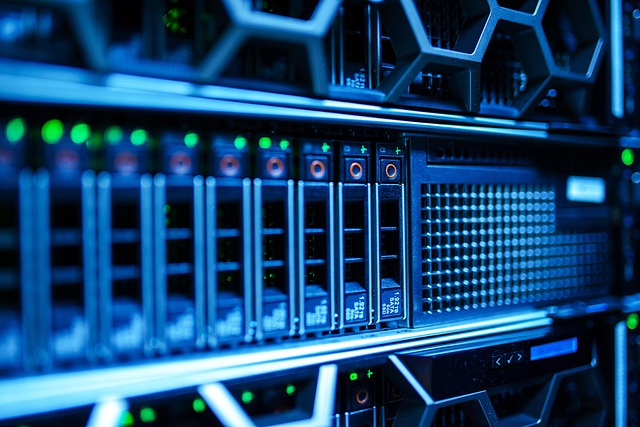
In what is being described as the largest chip leasing transaction in history, private equity giants Apollo Global Management and Blackstone have jointly raised $36 billion to purchase Google Tensor Processing Units (TPUs) for lease to Anthropic, the artificial intelligence company behind the Claude model series. The deal, first reported by multiple outlets and aggregated by AIBase, signals an unprecedented financial commitment to AI infrastructure and highlights the explosive demand for specialized hardware among frontier AI labs.
The $36 billion figure dwarfs previous compute-related transactions. For context, Microsoft has committed roughly $13 billion in compute credits to OpenAI over multiple years, and CoreWeave, a GPU-focused cloud provider, raised $12.5 billion in debt and equity in 2024. This single deal more than doubles those amounts. Apollo and Blackstone are not merely investors; they are acting as financial intermediaries that acquire the hardware and then lease it back to Anthropic, likely under long-term contracts that guarantee a return on the capital deployed.
Google's TPUs are custom-designed application-specific integrated circuits (ASICs) built specifically for machine learning workloads. They power Google's own services as well as Google Cloud's AI offerings. By securing a massive allocation of TPUs, Anthropic gains access to a large-scale compute cluster without the upfront capital expenditure of purchasing the chips outright—a model that has become increasingly common in the AI industry as training costs soar into the hundreds of millions.
Why Anthropic Needs Massive Compute
Anthropic, headquartered in San Francisco, is one of the few companies capable of competing with OpenAI and Google DeepMind at the frontier of large language model development. Its Claude series of models has gained significant traction in enterprise and consumer markets alike. Training state-of-the-art models requires not only immense compute during the initial training phase but also ongoing resources for inference, fine-tuning, and research iteration.
The company has been scaling aggressively. In March 2025, Anthropic closed a $3.5 billion funding round at a valuation of $61.5 billion, led by Lightspeed Venture Partners and others. Part of that capital was explicitly earmarked for compute infrastructure. The new lease deal with Apollo and Blackstone provides a separate, debt-like mechanism to expand compute capacity without diluting equity. This structure allows Anthropic to preserve its founding principles around safety research while meeting the hardware demands of frontier model development.
According to sources cited in the original AIBase report, the TPUs will be deployed across Google Cloud regions, with some potentially hosted in dedicated facilities operated by the financial partners. The arrangement is reminiscent of the model used by CoreWeave, which leases NVIDIA GPUs to AI companies, but on a vastly larger scale and with a single customer (Anthropic) anchoring the transaction.
The Financial Mechanics of the Deal
Apollo Global Management and Blackstone are among the world's largest alternative asset managers, with combined assets under management exceeding $1.5 trillion. Their entry into AI chip leasing reflects a broader trend of institutional capital flowing into the hardware layer of the AI stack. The $36 billion is raised through a combination of debt issuance and equity from the firms' credit and infrastructure funds. The exact interest rate and lease terms have not been disclosed, but typical structured finance deals for such assets carry yields in the 8–12% range, reflecting the risk profile of the rapidly evolving AI market.
Google, for its part, benefits from a guaranteed purchase order of its custom TPUs—units that might otherwise have uncertain demand as NVIDIA's GPUs remain the dominant choice for AI training. The deal provides Google Cloud with a long-term revenue stream and strengthens its position in the enterprise AI infrastructure market against Amazon AWS and Microsoft Azure. It also serves as a powerful signal to the market that TPUs are viable at scale for third-party workloads, beyond Google's own internal use.
Importantly, the lease structure allows Anthropic to treat the payments as operating expenses rather than capital expenditures, preserving its cash runway for research and business development. The arrangement also includes clauses that reportedly give Anthropic first rights to upgrade to next-generation TPU hardware, ensuring it remains at the cutting edge.
Implications for the AI Ecosystem
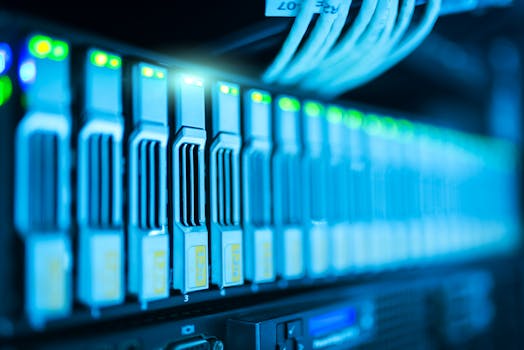
This transaction is likely to accelerate the trend of financialization in AI compute. If the Apollo–Blackstone–Anthropic model proves successful, other fintech and asset management firms may launch similar vehicles to acquire GPUs, TPUs, or emerging AI accelerators for lease to multiple customers. This could create a secondary market for compute capacity, lowering barriers for smaller AI companies that cannot afford to build their own clusters.
However, the deal also raises concerns about concentration risk. Anthropic is now deeply tied to Google's hardware roadmap. While Google has committed to long-term TPU development, any delays or design flaws could directly impact Anthropic's training timelines. Furthermore, the $36 billion obligation represents a fixed cost that Anthropic must meet regardless of the revenue it generates from its models. If the AI market experiences a downturn, such heavy operational leverage could pressure the company's finances.
On the competitive landscape, the deal may push OpenAI and Microsoft to deepen their own hardware commitments. Microsoft has invested heavily in custom AI chips (Maia) and continues to rely on NVIDIA GPUs. The scale of this lease could force OpenAI to secure similar financing for its compute needs, especially as it pursues the development of GPT-5 and beyond. Google DeepMind, meanwhile, already has access to abundant TPU resources, but this external deal validates its hardware design approach.
What This Means for the Future
The Apollo–Blackstone–Anthropic arrangement is a signal that the AI industry has crossed a threshold where compute is no longer just a technical constraint but a financial asset class. As models grow larger and training costs approach $1 billion per run, the ability to structure creative financing for hardware will become a competitive differentiator. We may see more partnerships between AI labs and Wall Street firms, with cloud providers serving as the underlying platform.
For the broader tech community, this deal underscores that the bottleneck for AGI development is increasingly financial, not just technical. Companies that can secure committed capital for compute will be the ones setting the pace of progress. The $36 billion figure, while staggering, may seem modest in retrospect if Anthropic or its competitors achieve breakthroughs in reasoning, multimodality, or autonomous agents.
In the near term, expect announcements of similar structures from other large AI labs. CoreWeave, Lambda, and other GPU-specialized providers may also tap into the credit markets to expand their fleets. And for Google, the deal positions its TPU as a serious alternative to NVIDIA's GPUs in the high-end AI training market—a market long dominated by the latter. The next few quarters will reveal whether this financial model scales or becomes a cautionary tale of over-leverage in a hype-driven industry.

댓글