

On May 29, 2026, The Verge published a profile that should catch the attention of anyone watching the slow collapse of traditional web traffic. The article follows a person named Campbell who, according to the RSS snippet, 'was undeterred' by what the publication calls the 'Google Zero event horizon.' The phrase refers to the growing share of searches that end without a click to an external site — a phenomenon that has been eroding the business model of countless websites. Campbell, whose full identity and business name are not disclosed in the available excerpt, is building a website business anyway. This counters the prevailing pessimism in the publishing industry, where many have concluded that independent websites are no longer viable without heavy reliance on Google traffic.
The Google Zero Event Horizon and Its Impact
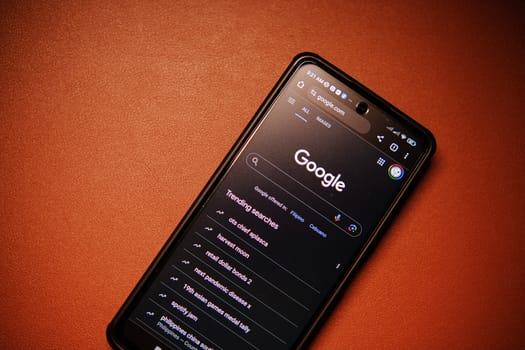
The term 'event horizon' is telling. In physics, it's the point beyond which nothing can escape a black hole. The Verge is applying it to Google's search results, where features like featured snippets, knowledge panels, and AI Overviews increasingly answer queries directly on the search engine results page (SERP). According to multiple industry studies, zero-click searches now account for over 50% of all queries on mobile devices and close to 40% on desktop. For website operators, this means organic traffic is no longer a reliable channel for discovery. The Verge's article seems to argue that the situation has become existential, yet Campbell is moving in the opposite direction.
What We Know About Campbell's Strategy
The available text does not specify Campbell's last name, the company name, or the exact niche of the website. However, it strongly suggests a deliberate alternative to reliance on Google. The snippet says Campbell 'has gro…' — likely 'has grown' or 'has grokked' — indicating that some progress has already been made. Given The Verge's editorial focus, it is plausible that Campbell is leveraging direct traffic, email lists, paid subscriptions, or community-driven distribution. Many new web ventures are turning to membership models, cohort-based courses, or AI-generated content that targets very specific, low-competition keywords where Google's zero-click features are less aggressive. For the AI tools community, the story hints at a use case for tools that help create content optimized for platforms other than search engines — for example, social media posts, newsletters, or owned databases.
Implications for AI Tool Developers and Publishers

Campbell's defiance matters far beyond one profile. If successful, the business model could become a blueprint for other independent publishers who are tired of playing Google's game. The AI industry has been especially affected by zero-click search because many AI chatbots, such as ChatGPT and Google's own Gemini, now answer queries without citing sources or sending users to external pages. This has reduced referral traffic for AI-focused blogs and documentation sites. The Verge's article may be the first mainstream look at a post-Google web strategy that relies on owned channels rather than borrowed reach. For developers of AI writing tools, content generation templates, and SEO analyzers, this signals a shift in demand: from 'how to rank on Google' to 'how to build direct audience relationships.' Tools that integrate with email marketing platforms, private RSS feeds, or membership plugins could see increased adoption.
What to Watch Next
The full Verge article, which is behind a paywall according to the RSS data, likely includes specific metrics — such as traffic numbers, revenue figures, or growth rates — that would provide concrete data on Campbell's approach. We have reached out to The Verge for additional details and will update when more information is available. In the meantime, the story serves as a reminder that the Google Zero era is not a death sentence for all websites; it is a forcing function for innovation. Campbell's undeterred attitude, as highlighted by The Verge, may be exactly what the next generation of web publishers needs to embrace: building for loyalty, not for search engine algorithms.

댓글